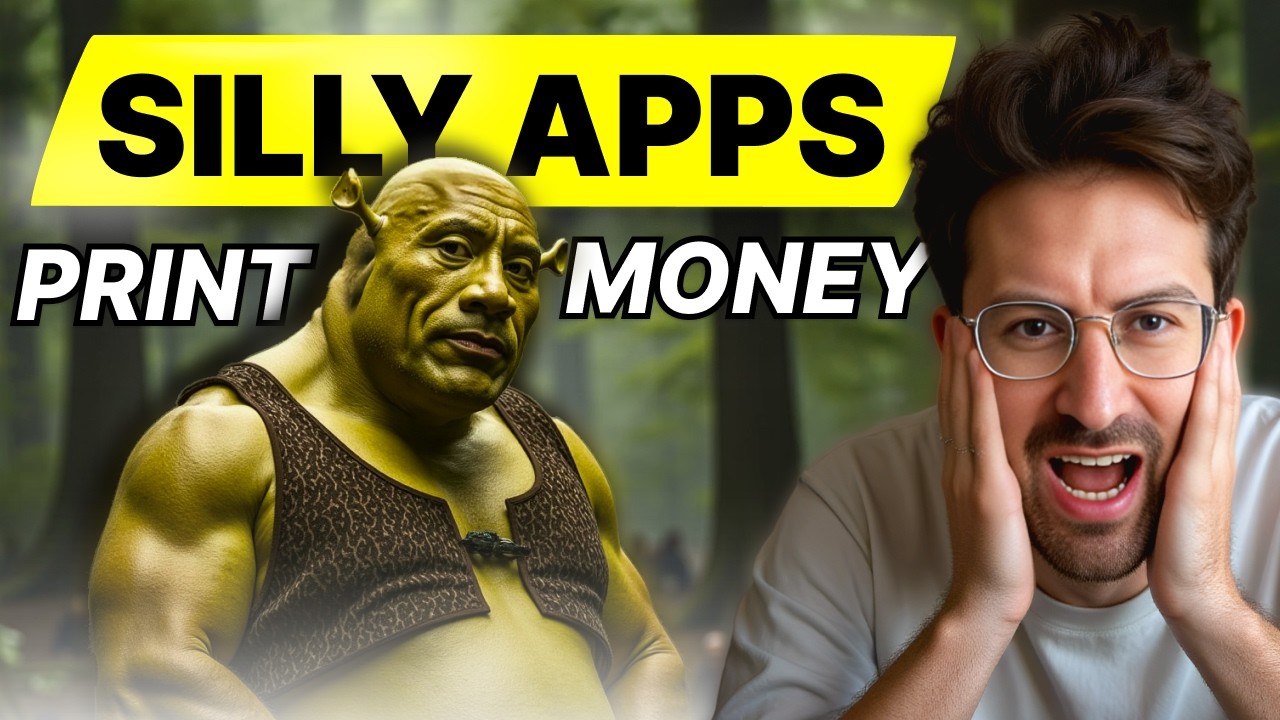
I quit my job to make $6M/year with AI apps
By Greg Isenberg
Join Greg Isenberg as he interviews Ben Benkhin, the creator of WOMBO, about how he built viral AI-powered mobile apps that have amassed over 250 million downloads. Ben shares his journey of identifying emerging AI technologies and transforming them into simple, user-friendly mobile experiences. From WOMBO’s selfie animation app to Dream, an early AI art generator, Ben reveals his strategies for creating viral content loops, monetizing apps, and navigating the challenges of scaling AI products.
Introduction
Ben Benkhin went from zero to over 250 million mobile app installs by leveraging open-source AI models and making them accessible to everyday users through intuitive mobile apps. Backed by Nvidia and other investors, Ben’s story is a masterclass in spotting trends, simplifying complex technology, and engineering virality.
1. The "Copy What Works" Strategy
Ben’s fundamental approach is rooted in mimesis - the idea of copying what already works and adding your own unique spin.
- Find something that’s already working.
- Copy it but add your own unique spin.
- Make it stupid simple for users.
"It's actually pretty f*cking easy if you don't overthink it too much."
This straightforward strategy helped Ben go from zero to over 100 million downloads in record time.
Origin of the Strategy
Ben first encountered this principle in video gaming, where he improved by watching better players and mimicking their style with his own twist. He applied the same mindset to app development.
2. How Ben Built WOMBO (100M+ Downloads)
In 2020, Ben noticed two key signals:
- The Reface app was #1 on the App Store, popularizing face swap technology.
- An open-source AI animation model, the First Order Motion Model, was going viral in tech communities.
Ben’s insight was to take this complex AI tech and make it accessible to everyone through a super-simple mobile interface.
The Result
- WOMBO launched in March 2021.
- Achieved 50 million downloads in the first month.
- Surpassed 100 million downloads shortly after.
3. The Secret to Viral App Design
Ben’s formula for virality includes:
- Minimal user input: Just a selfie or a text prompt.
- Pre-processing: Adding proprietary “magic sauce” to user input.
- Fast and free inference: Quick AI processing without cost to the user.
- Simple, fun interface: For WOMBO, just 4 screens - input → song selection → loading → output.
This simplicity was key to WOMBO’s massive adoption.
4. The Content Creation Loop
The true driver of WOMBO’s virality was its content creation loop:
- User creates a fun piece of content.
- User shares it on social media.
- Friends see it and download the app.
- The cycle repeats, driving exponential growth.
"The whole thing is engineered for virality."
Apps must enable users to create content they want to share.
5. Finding Viral Content Formats
Ben obsessively studies viral content on social platforms:
- Saves content with millions of views.
- Analyzes why it works.
- Identifies patterns that can be productized.
Example
Ben’s team created content turning celebrities into pregnant cats, which garnered over 20 million views on Instagram.
- The goal: Convert 1-2% of viewers into users.
6. Monetization Strategy
Ben learned monetization the hard way after burning through cash.
- 98% of users use the app for free.
- 2% of users pay, generating all revenue.
- Focus on subscriptions ($5/week or $5/month).
- Offer premium features like more generations or exclusive styles.
At its peak, the Dream app made $500K/month with this model.
7. The Cockroach Mode Phase
After initial success, Ben’s company nearly went bankrupt:
- Faced a $1 million server bill in one month.
- Lost funding when investors pulled out.
- Spent 1.5 years in "cockroach mode", focusing on survival and monetization.
"Money is fake" philosophy doesn’t work when servers cost real money!
8. The Massive Opportunity Right Now
Ben believes we are in a golden age for mobile AI apps:
- People are glued to their phones.
- There is a strong demand for entertainment and utility.
- New AI models emerge constantly.
- You don’t need venture capital to build successful apps.
Detailed Walkthrough of WOMBO’s Creation and Growth
Inspiration and Early Signals
- Reface app: Face swap app with hundreds of millions of downloads.
- First Order Motion Model: An open-source AI model animating selfies using driving videos.
Ben and his roommate realized no simple app existed for this AI tech, which was only accessible via complex tools like Google Colab notebooks.
Launch and Design
- Launched WOMBO in March 2021 after 7 months of development.
- Designed for simplicity: 4 screens (selfie input, song selection, loading, output).
- Selected 15 iconic and meme-friendly songs to maximize appeal.
- The app was so simple a 5-year-old could use it.
Virality Engineering
- Users create content quickly and share it naturally.
- WOMBO spent no money on marketing; all budget went to inference costs.
- The viral loop drove organic growth.
Other Successful AI Apps: Dream
Following WOMBO, Ben’s team created Dream, an AI art generator that predated Midjourney and DALL·E.
- Combined models like VQGAN and CLIP.
- Made image generation fast and easy.
- Used prompt templating to improve output quality.
- Applied the same principles: simple input, fast inference, fun interface.
Dream also became a number one app with millions of downloads.
Monetization and Financial Lessons
- Introduced subscriptions and ads.
- Subscriptions offered perks like multiple image generations and premium styles.
- Pricing evolved from $5/week to $5/month.
- Avoided aggressive dark patterns like hidden trials.
- Learned from top app monetizers like Nikita Beer.
Scaling Challenges and Solutions
- Faced huge server costs due to inference demands.
- Signed a 3-year contract with Amazon for better GPU pricing.
- Hired specialists to optimize model efficiency.
- Began exploring on-device inference to reduce cloud costs.
- Developed peer-to-peer computing concept: users share their device compute power to run workloads for others, earning rewards.
The Future: W.ai and Decentralized AI Computing
- Inspired by projects like BitTensor, Render, Golem.
- Created W.ai, a platform turning personal devices into compute contributors.
- Users can rent out idle compute power (MacBooks, gaming PCs, future consoles, phones).
- Rewards start as points, evolving into tokens and eventually money.
- Concept likened to “Airbnb for your device.”
Viral Content Creation and Trend Analysis
Ben emphasizes the importance of studying viral trends and content formats:
- Collects viral AI-generated content for analysis.
- Example: Babyfied images created using ChatGPT and Hedra.ai.
- Suggests productizing viral content formats into simple apps.
- Advocates for continuous trend tracking to stay sharp.
Example Viral Content: Celebrities as Pregnant Cats
- Combines recognizable celebrities, controversy, and shock value.
- Repeated the same format with different characters, achieving millions of views each time.
- Viral content drives app downloads with a conversion rate of 1-2%.
Advice for Building AI Mobile Apps
- Study the landscape: Analyze existing apps, UI, UX, and user flows.
- Understand viral content: Track what’s trending on platforms like Instagram, TikTok, and X (Twitter).
- Make it simple: Minimal user input, fast results, and intuitive interfaces.
- Engineer for virality: Build content creation loops that encourage sharing.
- Monetize early: Focus on subscriptions and premium features; don’t rely solely on user growth.
- Optimize inference: Balance cloud and device computing to reduce costs.
- Be persistent: Prepare for setbacks and “cockroach mode” phases.
Final Thoughts
Ben believes the opportunity to build AI-powered mobile apps is immense:
- People want entertainment and utility on their phones.
- You don’t need venture capital to succeed.
- If you create something great and timely, you can reach hundreds of millions of downloads and make tens of millions of dollars.
"It's a f*cking crazy time to be alive."
Useful Links
- WOMBO: https://wombo.com/m/home
- W.ai: https://w.ai/
- Greg Isenberg on Twitter: https://twitter.com/gregisenberg
- Ben Benkhin on X/Twitter: https://x.com/benzion_b
- Idea Browser (startup ideas): https://www.ideabrowser.com/
- Late Checkout Agency: https://latecheckout.agency/
- Boringmarketing: http://boringmarketing.com/
- The Vibe Marketer: http://thevibemarketer.com/
- Startup Empire: https://www.skool.com/startupempire/about
This article faithfully captures the insights and experiences shared by Ben Benkhin in the video "I quit my job to make $6M/year with AI apps" on Greg Isenberg’s channel.