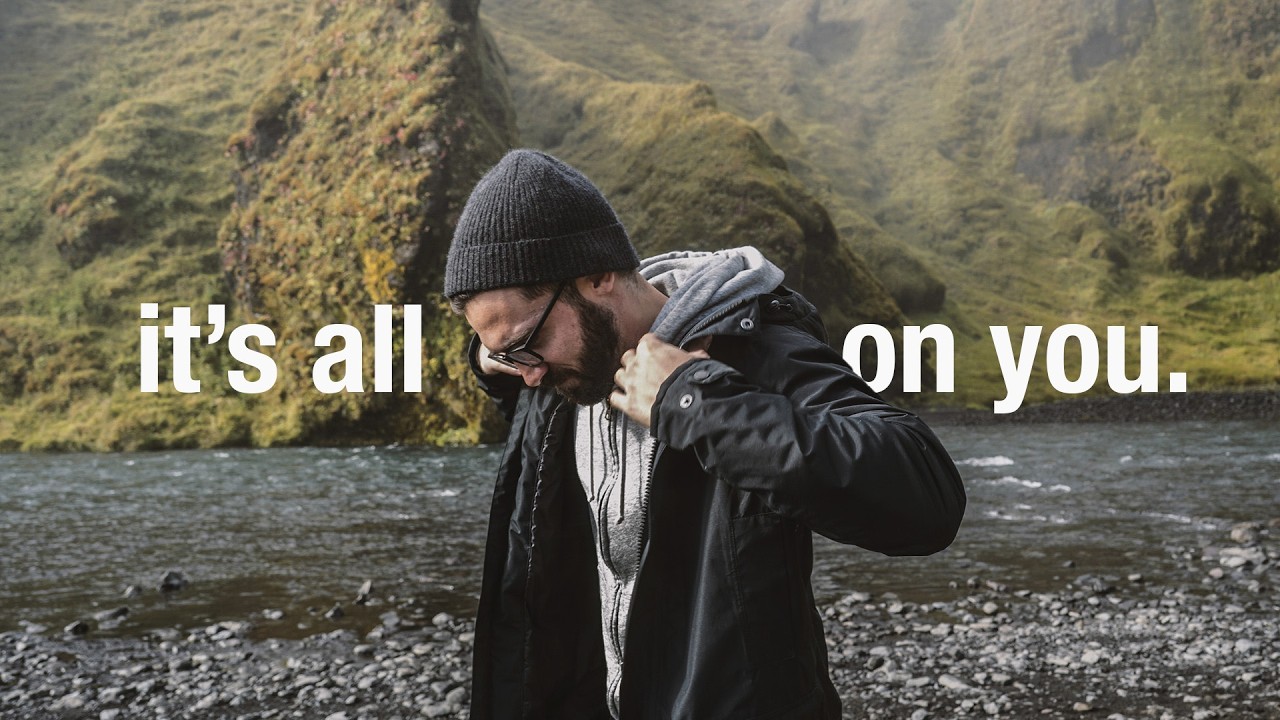
The most life-changing advice I ever got
In my early 20s, I encountered possibly the best self-development advice I've ever heard: You are responsible for everything. You might have heard some version of this before - everything that happens to you is your fault. The number one way to get happier is to take on 100% full accountability.
"Your life is your responsibility. Your happiness is your responsibility. Your success is your responsibility."
Do you want to be someone who looks back knowing you could have done more but didn’t? Probably not. This idea is one of the most widespread concepts in self-development: It’s all on you - your job, health, love life, even your inability to use that fancy standing desk you thought would be a total gamechanger.
The Power of Personal Responsibility
This advice is incredibly popular, but also polarizing and often misunderstood. Some variations of it are downright problematic. Here, I want to explore how taking personal responsibility can genuinely improve your life - and also acknowledge its very real limitations.
If you’ve read even a couple of self-development books or scrolled through self-help YouTube, you’ve probably come across this idea.
Bestselling author Mark Manson wrote in a 2012 blog post:
"There is a realization from which all potential personal growth emerges. This is the realization that you are responsible for everything you do in your life, no matter the external circumstances."
In other words:
"JUST DO IT. MAKE your dreams come true."
The idea isn't new; from ancient philosophy to modern self-help, survivors to Navy SEALs, some version of this advice has been passed down for centuries - and its promise is powerful. Take responsibility for everything, and it can improve your life, your mindset, your circumstances, and maybe even help you find love.
Extreme Ownership by Jocko Willink
Today, this idea often comes with the demand for extreme ownership. Jocko Willink, a former Navy SEAL and war commander, is a pretty intense guy - if his voice ever cracked in a room, there would be no survivors.
In his book Extreme Ownership, Jocko argues that taking full ownership of everything is the foundation of effective leadership and long-term success. These principles apply beyond leadership to individual responsibility as well.
From the audiobook:
"As individuals, we often attribute the success of others to luck or circumstances and make excuses for our own failures and the failures of our team. We blame our own poor performance on bad luck, circumstances beyond our control, or poorly performing subordinates. Anyone but ourselves.
Total responsibility for failure is a difficult thing to accept and taking ownership when things go wrong requires extraordinary humility and courage."
This message resonates because it’s often easier to blame external factors than to look inward. 100% ownership serves as a corrective to the victim mindset, helping you stop identifying as a victim and start taking accountability for what you can do to change your circumstances.
"Until you change the internal dialogue in your head, until you callous over the victim's mentality that the world is out to get you, you're going to stay in the same exact spot that you're in."
How This Advice Helped Me
In my early 20s, I struggled with many things, as you do at that age:
- Creating consistent exercise habits
- Eating better
- Dating anxiety (I literally didn’t go on a date for five years)
Looking back, my early self-development attempts were fraught with obstacles and excuses. But then I heard this advice:
Do you want to start lifting more? It's on you.
Do you want to eat right? It's on you.
Do you want to feel better, find love, get out of debt, build a business? Nobody’s coming to save you. You have to figure it out yourself. It’s on you.
There’s something powerful, motivating, and freeing about this mindset. It wasn’t just a one-time realization - it took years to fully embody it - but I realized how much I was getting in my own way.
I stopped waiting for permission, for support, or for motivation to magically appear. Instead, I started taking steps toward my goals.
If you say, “everything is my fault,” you become optimistic because you believe you can fix it. And for me, it paid off:
- I put on over 20 lbs of muscle.
- I resolved my dating anxiety and found love.
- I built a successful filmmaking business.
- I got out of debt.
It’s a convincing case study in personal responsibility. Even if you’ve been wronged or faced misfortune, taking ownership can be the path to success, happiness, and love.
The Problem with This Advice
That said, this isn’t the full story. There were factors outside of my control that contributed to these outcomes. Maybe, it wasn’t all on me. This is important to acknowledge, so let’s discuss the problems with this advice.
Misunderstanding Responsibility, Fault, and Blame
One major issue is how words like responsibility, fault, blame, and accountability are often used interchangeably - as if they mean the exact same thing.
Common phrases you might hear:
- "Everything that happens to you is your fault."
- "Everything that goes wrong in my life, I take full responsibility for."
- "The number one way to get happier is to take on 100% full accountability."
- "There was only one person to blame, and that person was me."
A popular and problematic version of this advice is: everything is your fault. This extreme version is attractive because it’s clear-cut but is really more marketing hype than truth.
The reality is that not everything that happens to us is our fault.
The Reality of an Unfair World
Have you looked around recently? Society is clearly unfair:
- The wealth gap between the top 1% and everyone else is growing.
- Wealth among the 99% is shrinking, despite people working hard.
- Obesity is increasing, not due to lowered willpower but environmental and societal changes.
- People spend more time scrolling on phones, not because brains have changed, but because of new tech environments.
- Rates of depression, anxiety, suicide, and loneliness are on the rise - especially among young people.
This is the complex world we’re trying to practice self-development in.
When we struggle, we're often told, "That's on you." But that's an oversimplification. It often puts all the blame on the individual when life’s challenges are much more nuanced.
Examples Where Fault Isn’t Clear
If I'm walking down the street and a stranger punches me in the face, is that my fault? Maybe I could have stayed home or been more cautious, but this advice doesn't fully apply here.
The problem with this advice is that it treats all outcomes as if they are fully within your control, ignoring luck, circumstances, and the actions of others.
While it sounds empowering, it often turns into guilt, making people blame themselves for things they didn’t cause rather than focusing on what they can realistically change.
Responsibility vs. Fault - Mark Manson’s Perspective
Mark Manson draws a clear distinction between fault and responsibility in an interview I did with him last year:
"Fault is generally external and it's past tense. Responsibility is always present and future tense. So, fault is like, 'Okay, this thing happened. I had no control over it.' Responsibility kicks in with, 'How am I going to react to this? What is my mindset? How am I going to choose to move forward?' And that is ever-present in every moment, no matter what happens."
When most people say, "You are responsible for everything in your life," they mean:
- You aren’t to blame for everything that happened to you.
- You are responsible for how you respond.
Jocko Willink on Taking Too Much Responsibility
Even Jocko offers a more nuanced take when asked if you can take too much ownership:
"Is it possible to take too much responsibility or blame yourself too frequently? There's going to be things in your life that you don't have control over, like someone getting a terrible disease.
There’s nothing you can do about that.
But what you can take ownership of is how you respond to the situation.
Most people think, 'That's not my fault. There's nothing I can do about that.' But more often than people think, there is something you can do."
Building Realistic Agency: The Stoics and Therapist Emma McAdam
The Stoics - pretty cool guys - taught long ago that life divides into two categories:
- Things you can control: your beliefs, your character, your actions, your effort.
- Things you cannot control: external events, other people, society, outcomes of your actions.
They didn’t say you are responsible for everything, but you are responsible for everything you can control.
For example, you can’t force your partner to stop being mad, but you can take responsibility for:
- How you communicate
- Whether you listen
- How you regulate your emotions
- Showing up honestly and with care rather than defensiveness
Therapist Emma McAdam explains how to build a healthier relationship with control:
"The world’s messed up. There’s bad people, discrimination, and lots of hardships.
When our energy is consumed by what we can’t control, it perpetuates helplessness.
But when we channel our efforts into where we do have agency and power, we build resilience.
A healthy locus of control means acknowledging what you can’t change and focusing all your energy on what you can."
It’s important to be honest about forces beyond your control - luck, timing, systems, people - and recognizing this can free you from shame.
However, don’t use this awareness as an excuse to avoid responsibility over the things you do control.
Final Thoughts
Yes, our problems can be unique and complex today. It might seem like past generations had it easier. But the alternative to taking ownership is to give up, throw your hands in the air, and say life’s not fair.
It won’t be easy or straightforward. You might not have the perfect solution now, but if you want to improve your life, you need to start with the belief that you can change.
At its core, this is why the message of personal responsibility was so powerful to me.
Squarespace Sponsorship
The creator economy moves fast, and it can be overwhelming to separate the hype from truly valuable tools.
Squarespace is a platform I love because:
- It makes building a website incredibly easy - answer a few prompts, get a solid first draft, and tweak until perfect.
- It’s more than a website builder - manage your domain, publish blogs, track analytics, run an online store, and book clients all in one place.
- It’s reliable - in over 10 years of using Squarespace, I’ve never had to worry about downtime, even during major traffic spikes.
If you want to try Squarespace, start a free trial at squarespace.com. When you’re ready to launch, visit squarespace.com/mattdavella to save 10% off your first purchase of a website or domain.
Useful Links & Resources Mentioned
- TeuxDeux To-Do List App
- Music for videos
- Social content editing with Descript
- Remote interviews with Riverside.fm
- Squarespace
- My 14L Travel Pack & gear
New here? I’m Matt. I made the award-winning documentary Minimalism and now make YouTube videos about life, productivity, and self-development. Subscribe if you want more content like this.
Get more from me:
Transform Your Videos into Articles
Convert any YouTube video into a well-structured, easy-to-read article in seconds. Perfect for learning, research, or content repurposing.